Light Sleep Explained: Why You Wake Up So Easily
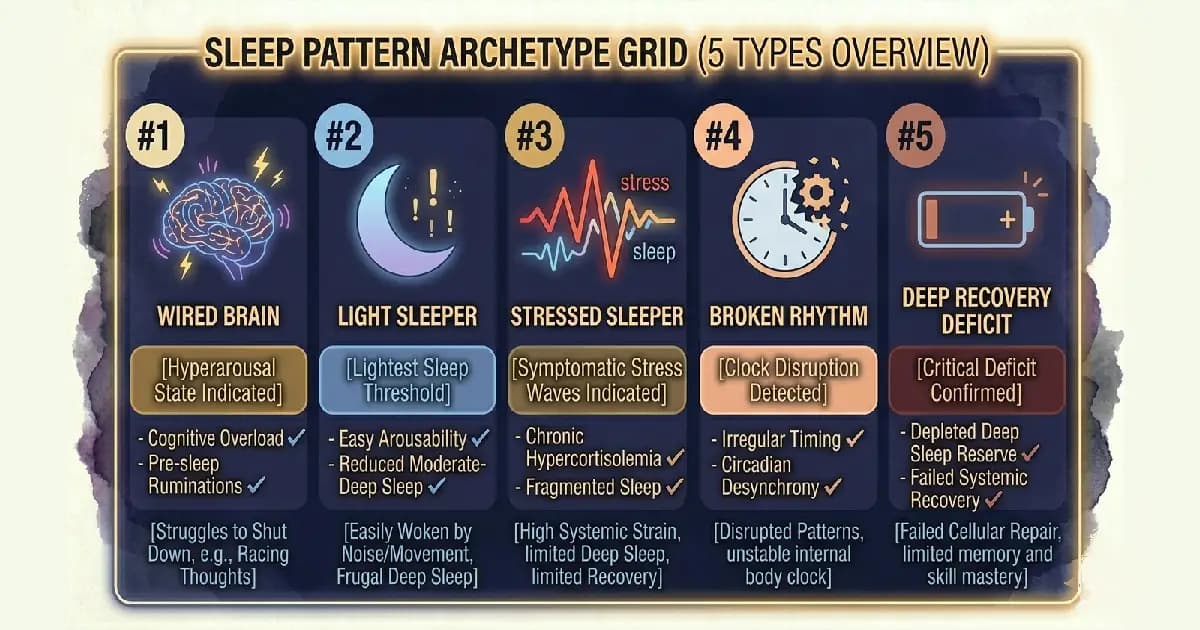
If small sounds, movement, or slight disturbances wake you up easily at night, it may reflect a sleep pattern where your system is spending more time in lighter stages of sleep or having difficulty staying in deeper stages.
If small sounds, movement, or slight disturbances wake you up easily at night, it may reflect a sleep pattern where your system is spending more time in lighter stages of sleep or having difficulty staying in deeper stages.
This is not about being “a bad sleeper.”
It relates more to how your brain moves between — and maintains — different stages of sleep.
This article explains what light sleep is, why it matters, and why some people may be more sensitive to disruptions.
What Light Sleep Actually Is
Sleep is made up of multiple stages that cycle throughout the night:
- Light sleep (Stage N1 and N2)
- Deep sleep (Stage N3)
- REM sleep
Light sleep acts as a transition between wakefulness and deeper sleep.
During this stage:
- Breathing begins to slow
- Heart rate starts to decrease
- Brain activity reduces, but can still respond to stimuli
This is generally the most responsive stage of sleep.
This is also why you can sleep through the night but still feel exhausted the next day.
Why Light Sleep Is Not a Problem by Itself
Light sleep is a normal and necessary part of healthy sleep cycles.
Each cycle typically begins with lighter stages before moving deeper.
The challenge is not light sleep itself.
It is:
Spending a higher proportion of time in lighter stages, or not maintaining deeper stages for long enough.
Why Some People Wake Up So Easily
If your sleep system is more sensitive, your brain may remain closer to an “alert-ready” state during sleep.
This can be influenced by factors such as:
- Ongoing stress or mental load
- Environmental sensitivity (noise, light, temperature)
- Irregular sleep patterns
- Fragmented sleep cycles
When the brain remains more responsive, even small disturbances may lead to waking.
The Nervous System Connection
Sleep depth is closely linked to how the nervous system is functioning.
Two general states are involved:
- Sympathetic state (more alert mode)
- Parasympathetic state (more rest-focused mode)
Deeper sleep is more likely when the body shifts further into a rest-focused state.
If that shift is incomplete:
- Sleep may remain lighter
- Awakenings may occur more easily
- Sleep cycles may be interrupted
This pattern can contribute to increased sleep sensitivity.
Environmental Sensitivity and Light Sleep
External factors can have a stronger impact when sleep is lighter.
Common influences include:
- Sudden or inconsistent noise
- Light exposure during the night
- Temperature changes
- Movement in the sleeping environment
In lighter sleep stages, the brain may continue monitoring the environment more closely.
This is a natural protective response.
Stress and Light Sleep Depth
Stress can influence both falling asleep and the depth of sleep.
When stress levels are higher:
- The brain may remain more active during sleep
- Deeper sleep stages may be shorter
- Sleep may be easier to disrupt
This can lead to experiences such as:
- Light or fragmented sleep
- More frequent awakenings
- A sense of being only partially rested
Why You Wake Up So Easily at Night
Waking easily is often linked to a combination of factors, including:
- Increased sleep sensitivity
- Reduced stability in deeper sleep stages
- Environmental triggers
- Ongoing nervous system activation
When these overlap, the brain may transition out of sleep more readily, even in response to minor changes.
What Light Sleep Feels Like
People who experience more time in lighter sleep often describe:
- Waking in response to small sounds
- Sleep feeling shallow or easily interrupted
- Remembering multiple awakenings
- Not feeling fully refreshed in the morning
Even when total sleep time appears sufficient, the quality of rest may feel inconsistent.
Key Insight About Light Sleep
Light sleep itself is not the issue.
The key factor is:
The system may not be consistently reaching or maintaining deeper sleep stages.
This often reflects a combination of nervous system sensitivity, environmental factors, and sleep cycle patterns.
Why Forcing Sleep Deeper Doesn't Work
Deep sleep cannot be directly forced.
It tends to occur when supportive conditions are in place, such as:
- A calmer nervous system
- A stable sleep environment
- More consistent sleep timing
Trying to force deeper sleep can increase awareness and alertness, which may have the opposite effect.
Key Takeaway
If you wake easily at night, it does not mean your body is failing to sleep.
More often, it suggests:
Your sleep system is staying closer to a more responsive state, making it easier to be disrupted.
Next Step: Understanding Your Sleep Pattern
Light sleep sensitivity often overlaps with broader sleep patterns.
Understanding your own pattern can help you choose approaches that better support your sleep over time.
If you haven't already, the sleep quiz can help you explore which pattern may be most relevant for you.
